Is Cost of Equity a Percentage? How to Read the Number You Got
Is cost of equity a percentage? Yes, an annual rate. Learn how to read your 11% result, convert it to monthly, and choose how many decimals to report.
By the CostOfEquityCalculator.com team
Yes, cost of equity is a percentage. It is an annual rate of return, not a dollar amount and not a ratio you can read off the balance sheet. An 11% result means shareholders need about 11% a year on the money they have tied up in the business.

The mix-up is easy to make. Every input looks like a percentage, the math multiplies some of them together, and most tools hand back one number with a percent sign and no units attached.
The cost of equity percentage formula
All three standard methods combine annual rates, so the answer comes out as an annual rate too.
CAPM with a 5% risk-free rate, a beta of 1.2 and a 5% equity risk premium:
Ke = 5% + 1.2 x 5% = 5% + 6% = 11%The dividend growth model on a $50.00 share that just paid $2.00 with 4% growth:
Ke = D1 / P0 + g = $2.08 / $50.00 + 4% = 4.16% + 4% = 8.16%The build-up method for a small private company stacks a 5% risk-free rate, a 5% equity risk premium, a 3% size premium, no industry adjustment and a 2% company-specific premium to reach 15%.
Adding premiums that way only works because each layer is quoted on the same basis: percent per year. The cost of equity is the finished stack, and it is a required rate of return rather than something the company has already earned. Each calculation is set out line by line in the three worked examples.
Why it is not a ratio you read off the financial statements
Return on equity is a ratio. You divide net income by book equity, and both numbers come from filed statements. It describes what already happened.
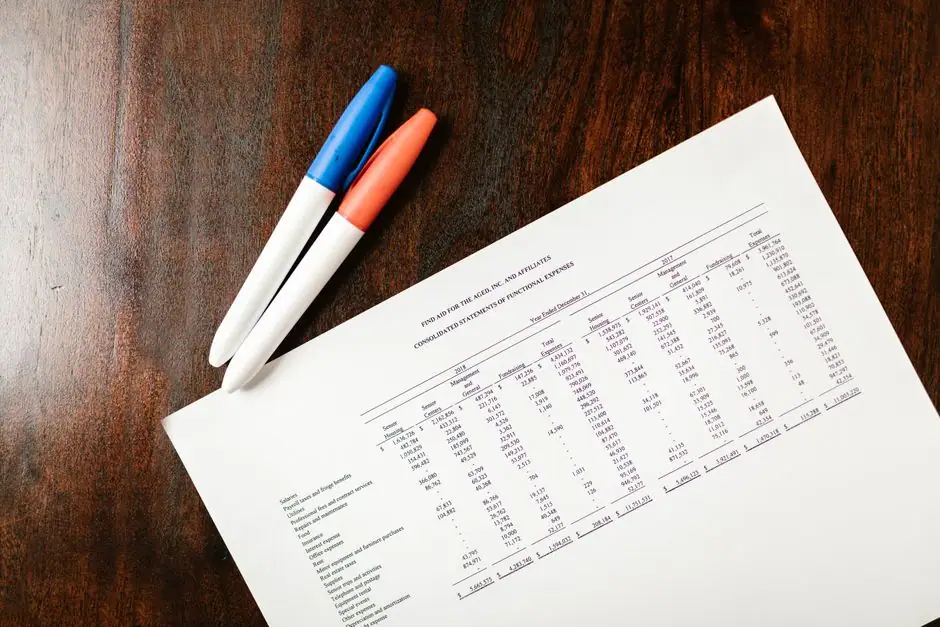
Cost of equity describes what investors demand next. No account holds it, no auditor signs it, and two careful analysts can reach different answers for the same company. That is why you cannot find cost of equity on the balance sheet, and why cost of equity and return on equity are not the same figure.
People who search for a cost of equity ratio usually want one of three things: the percentage rate itself, return on equity, or the equity weight inside WACC. Only the first one is cost of equity.
Nominal or real: the inflation basis of your rate
If your risk-free rate is a Treasury yield quoted today, your cost of equity is nominal. It already carries expected inflation inside it. The Treasury publishes the daily par yield curve, and those yields are nominal.

A nominal rate belongs with cash flows that grow with inflation. A real rate belongs with cash flows held in today’s buying power. Mixing the two is a common error and it moves a valuation a long way.
To go from nominal to real, divide rather than subtract. Assume 2% expected inflation with the 11% CAPM result:
(1 + 0.11) / (1 + 0.02) - 1 = 8.8%That is the Fisher equation. Simple subtraction gives 9%, which is close but not the same. Take your inflation assumption from a published series such as the consumer price index and write down which one you used.
Turning an annual rate into a monthly or quarterly one
Shorter discount periods need the rate restated, not divided.
- Start with the annual rate. Here it is 11%.
- Monthly: (1.11)^(1/12) - 1 = 0.873% per month.
- Quarterly: (1.11)^(1/4) - 1 = 2.643% per quarter.
Dividing 11% by 12 gives 0.917%, which compounds back to 11.57% a year. The gap looks tiny in one month and grows across a long forecast.
What an 11 percent cost of equity actually tells you
It is a hurdle, not a prediction. At 11%, a project funded with equity has to clear 11% a year before shareholders are better off. Below that, value leaks away even when the project shows a profit.
It is also a comparison tool. Whether 11% is high or low depends on the sector, and the table on cost of equity by industry shows how far US sectors spread apart. The answer on what counts as a good cost of equity covers how to judge your own number.
One more thing it is not: a cash cost. Nothing gets debited anywhere.
The same percentage as a dollar amount
Multiply the rate by the equity value and you get an annual dollar cost. The $50.00 share with an 8.16% cost of equity needs about $4.08 of value per share per year. The $2.08 dividend covers half of that, and 4% price growth of $2.00 covers the rest.
Equity gets no tax deduction. Interest does, so at a 21% corporate tax rate the cost of debt drops after tax, while an 11% cost of equity enters WACC as 11%.
How many decimals to report
Carry two decimals while you work, then round once at the end.
Rounding matters most in a perpetuity. With the 8.16% rate and 4% growth, the divisor is 4.16%. Round the rate to 8% and the divisor becomes 4.00%, which lifts the terminal value by about 4%. A change of 0.16 points in the rate moved the answer far more than the rounding looked like it would.
So: one decimal for a report or a memo, two decimals when the rate feeds a perpetuity or a decision sitting near the line. Say which convention you used, because a reviewer who rebuilds your model at 8% will not match your total.
Check your result
Run your inputs through the Cost of Equity Calculator on the home page. It returns an annual percentage for CAPM, the dividend growth model and the build-up method, so you can see which basis your number came from before you put it in a model.
Frequently asked questions
Does an 11% cost of equity mean the stock will return 11% next year?
No. It is the return investors require, not a forecast of what the share price will do. In a single year, a stock with an 11% cost of equity can return 40% or lose 20%. The rate is the yardstick you discount cash flows with and the minimum a project has to beat, not an expected outcome.
Should I enter cost of equity as 11 or 0.11 in a spreadsheet?
Either works if you stay consistent. Spreadsheets store 11% as 0.11, so typing 11 into a plain number cell and then discounting with it gives nonsense. Format the cell as a percentage and type 11%, or type 0.11 into a number cell and label the row so the next reader knows which form you used.
Can a cost of equity percentage be negative or above 100%?
Above 100% almost always means an input error, such as a beta entered as 120 instead of 1.2. Negative is possible on paper if beta or the equity risk premium is negative, but a negative required return on stock is not a usable valuation input. Recheck each input before you report a number like that.
Is the percentage a pre-tax or after-tax rate?
Cost of equity gets no tax shield, so the percentage you calculate is the rate shareholders need and it enters WACC unchanged. Interest is deductible, so a cost of debt is multiplied by one minus the tax rate, which is 0.79 at a 21% corporate rate. Dividends come out of after-tax profit, so no such adjustment applies to equity.